
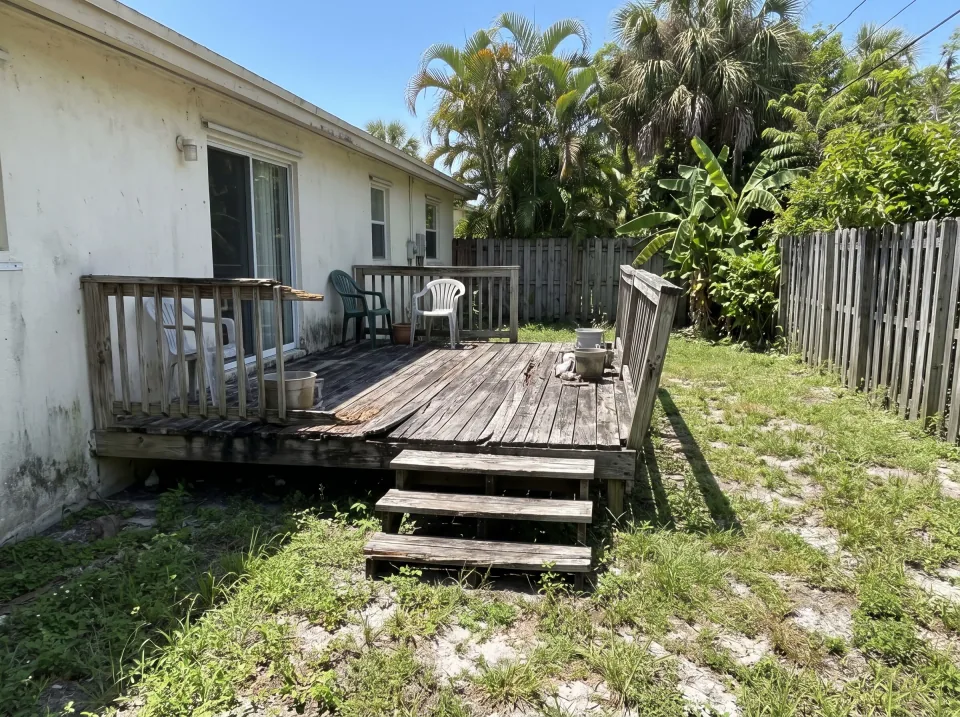

If you are figuring out how to remove a deck in South Florida, the tear-out is usually the easy part. The work that stalls most homeowners is everything around it: the permit question, the posts set in concrete, the rusted screws and a pile of old lumber your city will not take at the curb.
This guide walks you through the whole job in order, from the calls to make before you pull a board to where the wood goes after. It also tells you plainly when a deck is better handed off, and what that costs with Rapid Haul.
 01
How hard is it to remove a deck yourself?
Removing a small, low, freestanding deck yourself is a realistic weekend job for two people with a pry bar, a reciprocating saw, a drill and a wheelbarrow. Taking the boards up is quick. What slows people down is the rusted hardware, the posts set in concrete and the size of the lumber pile at the end.
Raised decks, decks attached to the house, decks over water and big decks are a different job. Those carry real fall risk, they can hide water damage at the house wall, and they make far more debris. If yours is one of those, read the steps below so you know what is involved, then skip to the last section.
 02
Do you need a permit to remove a deck in Florida?
Whether you need a permit to remove a deck depends on your city and on the deck itself, so call your city or county building department before you start. Some cities treat a freestanding deck differently from one tied into the house, and waterfront decks can bring in other agencies.
If you do the work on your own home, Florida's owner-builder exemption lets owners work on their own one- or two-family residence, but the owner must personally sign the permit application and directly supervise the work. Our guides to Broward permits and Miami-Dade permits explain where to ask. Rapid Haul does not pull permits; the property owner or the GC does.
Before you dig out any post footing, contact Sunshine 811, which is free. Florida's underground facility law asks for notice at least 2 full business days before excavation or demolition on land, and irrigation and utility lines often run right under a deck.
 03
How to remove a deck, step by step
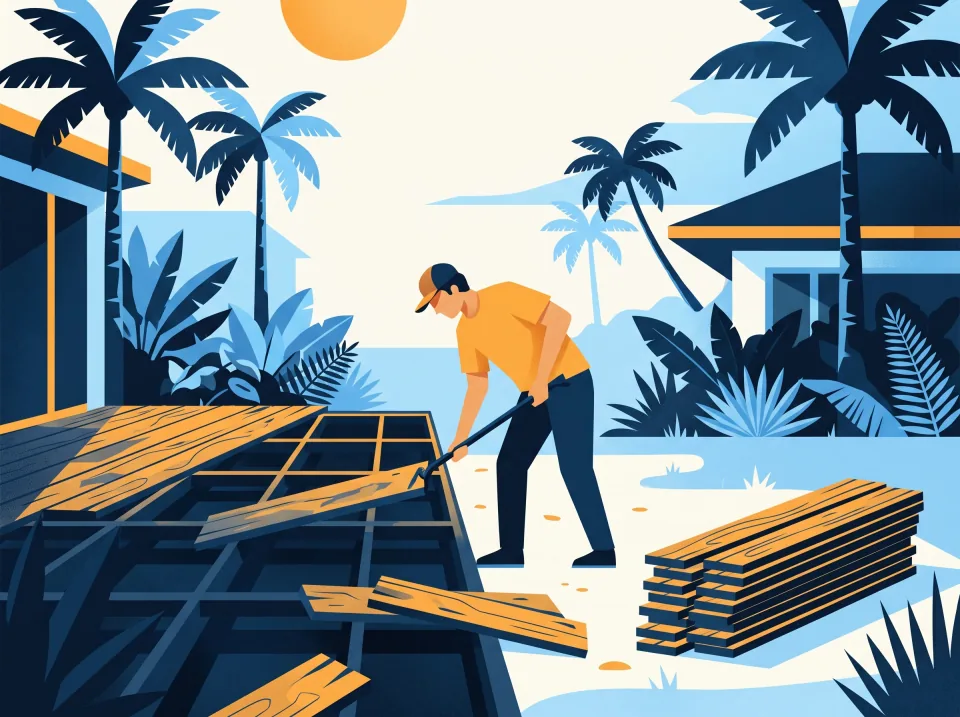
Work from the top down and from the outside in, so nothing you are standing on is the next thing to come off. Have an electrician disconnect any lights, outlets or fans wired into the deck first, and ask your HOA about work hours if you have one.
- Take off the railings and stairs first. They are the pieces most likely to fall on someone.
- Pull the deck boards. A pry bar handles nails. Rusted screws usually need cutting, so run a reciprocating saw blade between the board and the joist.
- Cut the joists free from the beams and lower them by hand. Do not drop long pieces off a raised deck.
- Take down the beams and posts. Posts in concrete footings get cut at ground level or dug out with the footing, after your 811 ticket clears.
- If the deck is attached to the house, remove the ledger board last and slowly. That is where hidden water damage shows up and where siding gets damaged.
- Pull nails, stack the lumber in short lengths and rake the yard for screws before anyone walks barefoot there.
 04
Is old pressure-treated deck wood safe to burn or reuse?
Old pressure-treated deck wood should never be burned, and it should not be chipped into mulch. The EPA says manufacturers stopped making CCA-treated wood for homeowner uses in December 2003, and it advises against burning CCA or other preservative-treated wood in a residential setting because of the chemicals in the smoke and ash.
A deck built before 2004 may well be CCA lumber, and you usually cannot tell by looking. Wear gloves and a dust mask when you cut it, wash your hands before you eat and keep the sawdust off the lawn where kids and pets play. The EPA notes treated wood can usually go out with ordinary trash collection, but your city's bulk rules decide how much and in what form.
 05
Where does deck debris go in South Florida?
Deck debris in South Florida goes either to a hauler or to a disposal site you drive it to, because most city curbside bulk programs cap the pile and many refuse construction material outright. A deck makes a bigger pile than people expect, and the concrete from footings is the first thing turned away. Here is what three city programs publish:
| City | Bulk limit | Deck-related exclusions |
|---|---|---|
| Fort Lauderdale | Once a month, pile no larger than 10 cubic yards (city rules) | Not taken: dirt/sod, sand, pavers, concrete, and tiles |
| Hollywood | Once a month, no more than 6 cubic yards (city FAQ) | Not taken: construction and demolition material |
| Coral Gables | Up to 1 cubic yard, excess billed at $15 per cubic yard (city trash page) | No construction material |
- Check your own city's page before you build a pile at the street. Rules differ city to city and a refused pile can draw a citation.
- If you haul it yourself, you need a vehicle that can carry long, heavy, nail-filled lumber and a disposal site that accepts it.
- If the tear-out is done and you only need the pile gone, that is construction debris hauling, which starts at $200 with Rapid Haul.
06Where to start if you want the deck gone this week
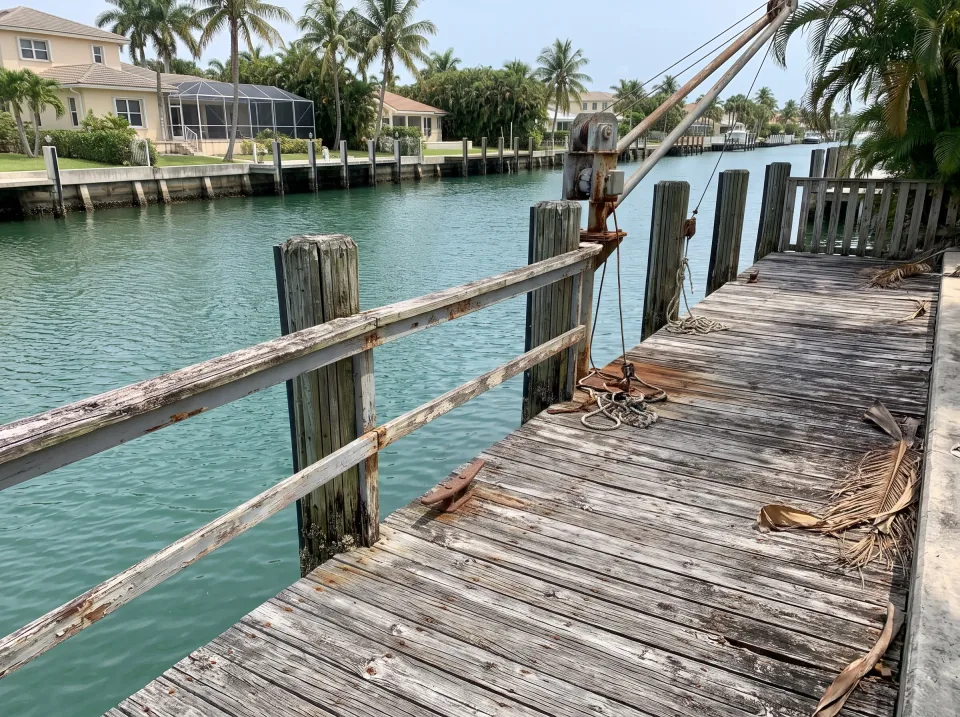
Hand the job off if any of these are true: the deck is raised more than a step or two, it is attached to the house, it sits over water or a seawall, it is large, or you do not have a free weekend and a helper. Waterfront jobs in particular bring their own rules, which the Las Olas job story covers.
Text me a photo of the whole deck and the path to the street at (754) 249-1015 and I will give you one flat, all-in price, usually the same day. I answer myself, Monday to Saturday, 7 AM to 7 PM. Rapid Haul is insured with $1M general liability and does non-structural tear-out only, so the deck comes out and the house stays as it is. Jobs of $1,000 and over take a 50% deposit. See what is included on the deck demolition page.
 4.9